

Finding Your Design POV
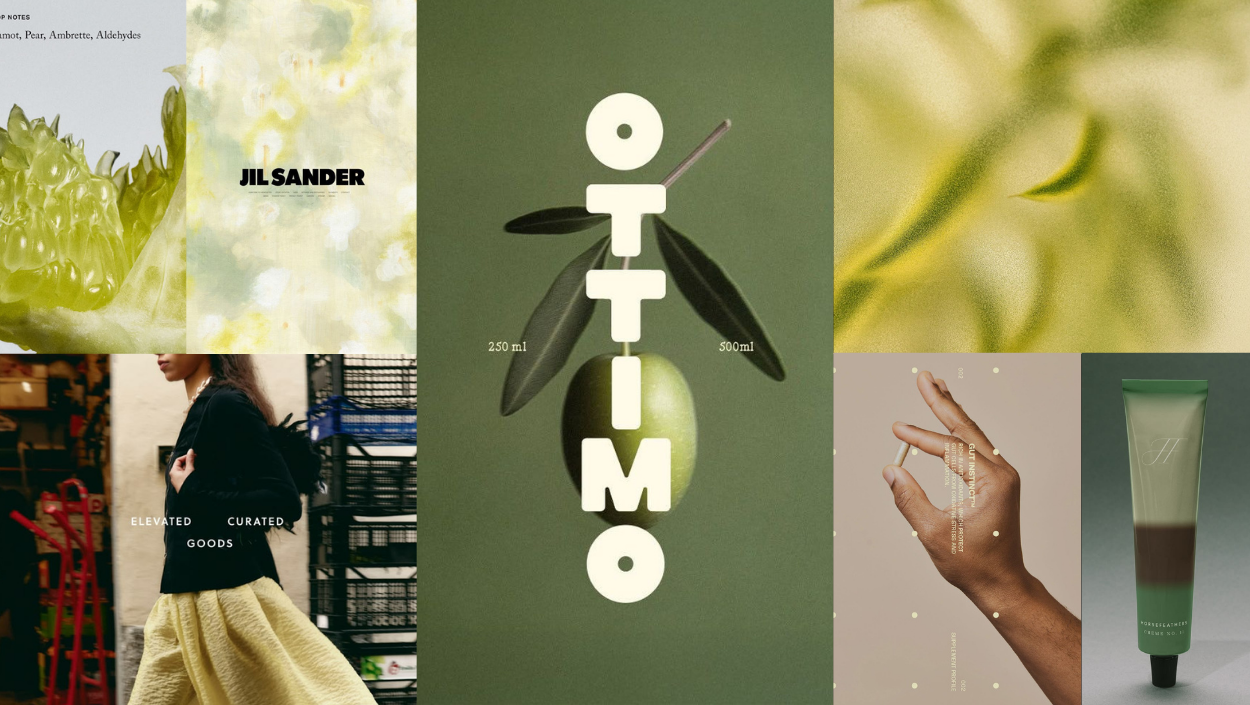
A note before we start: this post will ask you some questions. Real ones you’re going to need to sit with. Don’t be scared!'
We are all following a bunch of designers on Instagram whose work is instantly recognizable the second you see it during your scroll time. If you go to their grid, it’s like a curated brand in and of itself. They’ve got the look, that je ne sais quoi, that sprezzatura, that it factor. You may not be able to put a finger on what it is, per se, but it’s a unified POV.
And then, naturally, you might wonder, “Do I have that??”
So they become your aspirational design role model: You start paying attention to how they use type. You watch for their color combinations. You start making work that echoes what you’ve been admiring, hoping that through proximity you’ll absorb the thing you’re actually after.
The problem is that what you’re looking at isn’t a style. It’s the residue of a point of view built over years of decisions, influences, instincts, clients, mistakes, and moments of clarity that are entirely that person’s own. You can replicate the surface. The source is a different story. It’s the difference between experience and exposure.
Style and Point of View Are Not the Same Thing
Most designers use these words interchangeably, and from the outside, they can look similar. But the distinction matters because confusing them is usually what keeps designers stuck.
Style is the visual vocabulary. It’s the typefaces you reach for instinctively, the way you handle space, whether your work leans warm or cool, refined or maximalist. Style is visible, documentable, and yes, imitable.
Point of view, on the other hand, is the belief system running underneath all of it. POV is what good design actually does. It informs who you most want to be creating work for. It draws a line in the sand for what you won’t compromise on, even when a client pushes back. Oftentimes, it’s operating in your work long before you can name it, which is exactly why it’s so hard to fake.
In the words of Edna Woolman Chase,
“Fashion can be bought. Style one must possess.”
Just substitute “Design Style” and “POV,” and it works in any creative discipline.
I work across high-end hospitality, fashion, and packaged goods. Those three categories don’t always look the same from project to project. Some of my work is warmer. Some is sharper. Some is more playful. But there’s a thread running through all of it: dramatic scale, breathing room, a belief that every element should earn its place, and that the work should feel elevated without announcing that it’s trying to be.
I didn’t have language for that until a designer, looking through my portfolio for the first time, said: “Your work is so restrained.”
I didn’t know that was what I had. I just knew what I didn’t like—clutter, noise, work that tried too hard or tried to be too ‘designery’. My point of view had been operating long before I could describe it. Turns out, that’s usually how it goes.


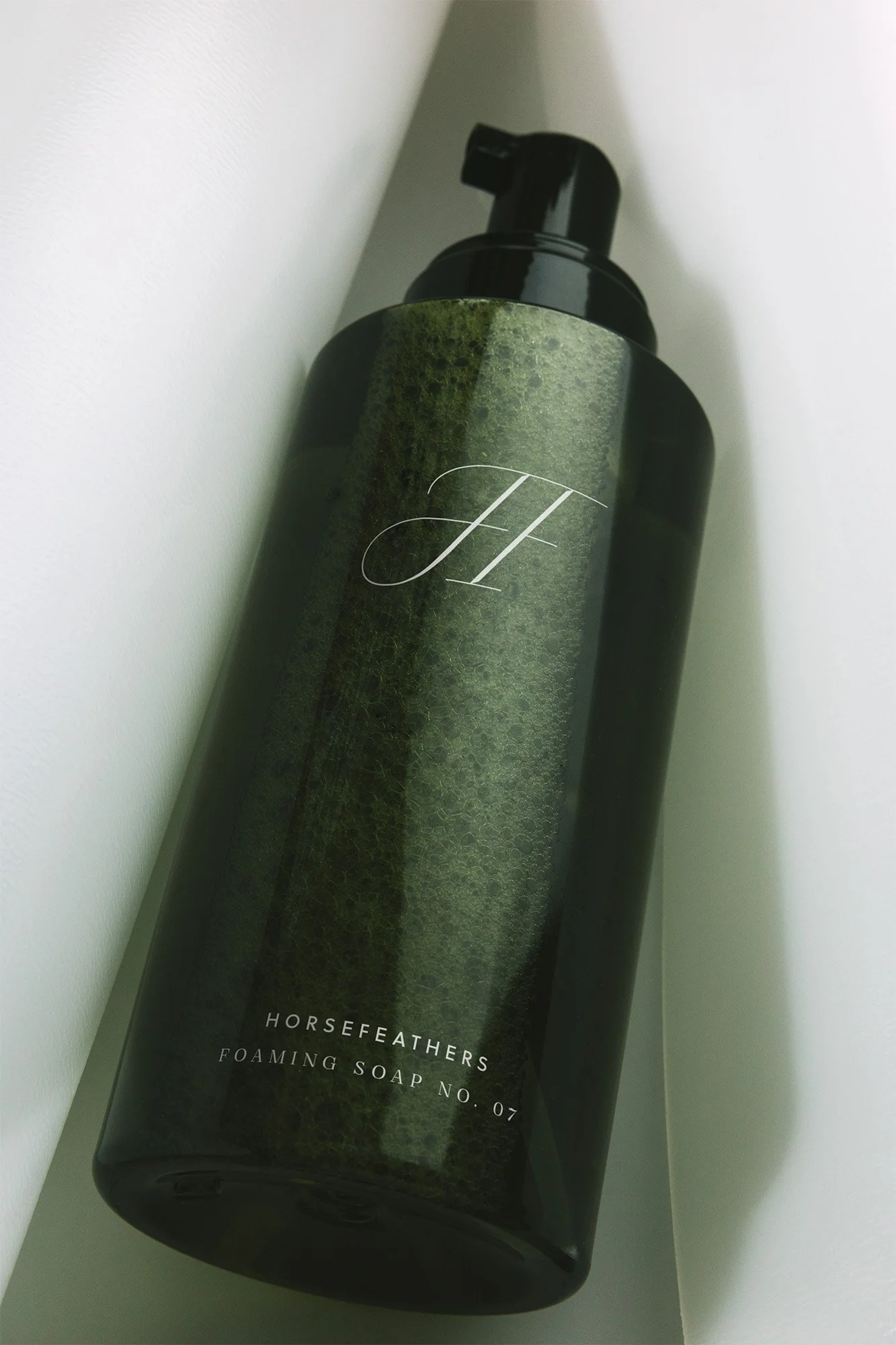


What Do You Actually Notice?
Before we get into niching, positioning, or any of the business mechanics, there’s a more foundational question worth sitting with.
What do you notice when you’re not thinking about design?
When you walk into a restaurant, what catches your eye first? The menu typography? The way the lighting sets a mood before the food even arrives? The tension between a rough wall texture and precisely placed glassware?
When you’re in a clothing store, do you find yourself drawn to the brand architecture, the way a single label creates a world that the garment lives inside? Do you notice when a brand is working too hard, doing too much explaining instead of just being the thing it says it is?
What magazines did you read as a kid that had nothing to do with graphic design?
What colors in nature make you stop in awe?
What do you find your camera roll filled with?
I grew up obsessed with fashion and interior design magazines. Catch me in a Barnes & Noble cafe, leafing through a stack of magazines, with no intention of purchasing any of them. Long before I understood what graphic design was or knew that I wanted to do it as a career, I understood something about high-end branding that took me years to name. In the fashion world, I loved how the brand’s job isn’t to do all the heavy lifting. It says enough to establish the world, then it gets out of the way and lets the work, the garment, the room, the dish, do the speaking.
That belief is still the engine of everything I make today.
Your point of view didn’t start when you opened Illustrator for the first time. No no no. It started with whatever made you feel something before you knew you were paying attention. It started when you began to understand that you were a creative being.
So, what do you notice? Write it down without filtering it through design first. Just write what you actually see.


The Problem With “Niche Down”
If you’ve spent any time in freelance design communities, you’ve heard this one: Niche down. Get specific. Pick a lane. Stop trying to be everything to everyone.
It’s not bad advice. Honestly, I stand behind it. But delivered without context, it causes real damage because most designers hear it and immediately start choosing a lane based on what seems strategic rather than what actually resonates with how they already work and think.
They pick an industry because they’ve seen other designers win in it. Or they pick an aesthetic because it’s performing well right now. Their portfolio is built around a direction they’ve assigned to themselves rather than one they found by actually doing the work…and then they wonder why it feels like wearing someone else’s clothes.
What nobody explains is that the niche is supposed to find you.
My three lanes didn’t come from a strategy session or a counseling session. It was the product of a pattern I eventually recognized in my own network. The clients I loved most kept sending me people who thought similarly, people who valued sophistication over noise, who understood that restraint is a deliberate choice, who wanted a designer they could trust rather than one they had to art-direct. I didn’t choose them, exactly. I just kept saying yes to the work that felt like mine, and over time, the thread/through-line became visible.
Okay, I need you to do a tiny bit of soul searching with this question:
The question worth asking isn’t “what should I niche into?” It’s “what work has already been trying to claim me?” Look at the projects you’ve taken on for free or at a discount because you just wanted to do them. Look at the clients where the conversations felt easy, and their vision was legible to you immediately. Look at the briefs that made you excited before you even opened your laptop. That’s your lane.
I also want to name something specific about style-based niching, because I see this one a lot. Deciding to only make work that looks like a particular aesthetic, whether that’s maximalist, Swiss grid, hand-lettered, or editorial, is a visual filter. Yes, it narrows what you’ll take on, but it doesn’t answer the deeper question of why you make what you make or who you make it for. Those answers are what clients actually respond to. Style for the sake of style is not the goal; that style still needs to align with answering your client’s problems.
What It Actually Costs You
Not having a point of view doesn’t usually affect your design business right away. In the beginning, a broad portfolio can look like an asset. Look at you: you’re flexible, available, you can take anything. An ideal designer to hire!
But this, left unchecked, will eventually cost you.
You’ll feel it in the weight of always performing someone else’s taste. You’ll notice the time consumed when every project becomes a research project into what this client wants, what this aesthetic calls for, what this style guide demands. You will execute it competently, but at the end of the project, it doesn’t feel like you made it. Someone made it through you.
That distance is where imposter syndrome lives. And the irony is that you feel like a fraud, not because you’re bad at design, but because you’ve gotten skilled at executing other people’s visions rather than your own.
Here’s another way to see it: You could be a skilled painter for hire who does portraits, landscapes, and cartoons. You do it all, and you can do it all well. But when people hire you, they're hiring the generic skill of painting, paying you to bring their vision to life as accurately as possible. You’re an executor. And when you’re an executor, they are in control of the final product.
Now, picture a painter known specifically for watery, floral still lives on raw canvas. People come to that painter not to execute a vision but to have one of theirs. They want to be part of something that painter made. The trust is already there before the first conversation. There’s no art direction happening because the client came specifically for that painter’s direction.
That second scenario is a fundamentally different relationship to the work and to the people you do it for. And honestly, way more freeing and fulfilling. P.S., these people usually get paid more and have greater client respect because clients view them as experts rather than executors. Win-win for everyone!
On Constraints and Creative Freedom
There’s a fear that comes up in the niching conversation pretty often: if I commit to a point of view, will all my work start to look the same?
In my experience, no. Real constraints, the kind that come from deeply held aesthetic standards rather than arbitrary rules, are actually generative. They don’t close off creative possibilities so much as they define the container inside which real exploration can happen. When I work on a brand that needs to feel more playful, the work can go there. But it doesn’t become juvenile, because that standard of sophistication is part of how I see. I can’t turn it off. I’ve tried, but all of my work undeniably has an element of me in it.
Having rules in place actually makes the creative exploration easier, not harder, because I know what world the work needs to live in. And inside that world, there’s actually a lot of room to move.
How to Start Finding Yours
You probably already have a point of view. You just haven’t looked backward long enough to see it. Time to whip out the creative mirror and take a good, long look.
A few things that actually help:
Look outside of design first. What are you drawn to in fashion, food, architecture, film, and/or music? What do those things have in common? What standard do they all meet that most things don’t? That standard was running before you had a design education, and it’s worth paying attention to.
Audit what you’re most proud of, and be honest about it. I’m not saying to look at what performed best or got the most engagement. What work, when you look at it, makes you think yes, that’s mine! Look for the thread connecting those pieces without forcing one. I promise you, it’s there.
Ask someone else to describe it. You can’t see yourself clearly from the inside. Show your portfolio to another designer you respect and ask them to name the sensibility they see running through it, not feedback on the work itself, the sensibility underneath it. The words they use will probably surprise you, and some of them will land like something you always knew but never said out loud.
Pay attention to what you refuse. Your standards are often clearest in what you won’t do. What briefs make you deflate a little or be like “ugh….should I take this one”? What client directions feel like they’re asking you to betray something? That discomfort is data.
Finding your point of view isn’t a linear process. Wish it was, but it’s definitely a journey. It’s more like developing peripheral vision: you practice looking, and one day something comes into focus that was there the whole time.
Your version of that moment is coming. Or maybe it already happened and you didn’t quite catch it.
Go back and look. The pattern is already there.
Class Dismissed.
If you’re in the middle of figuring this out, that’s exactly who The Collective is built for. Come introduce yourself in the Chat.
